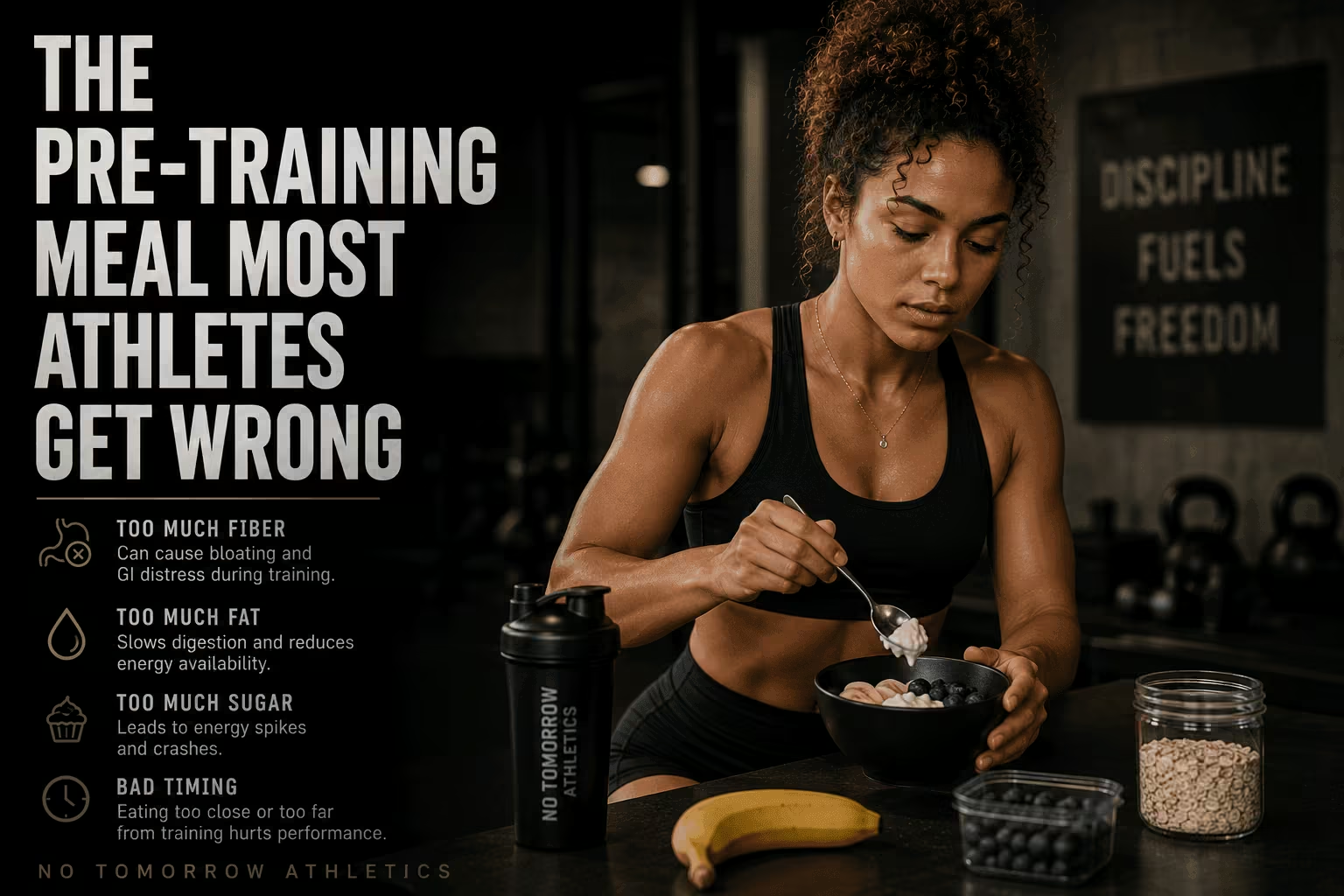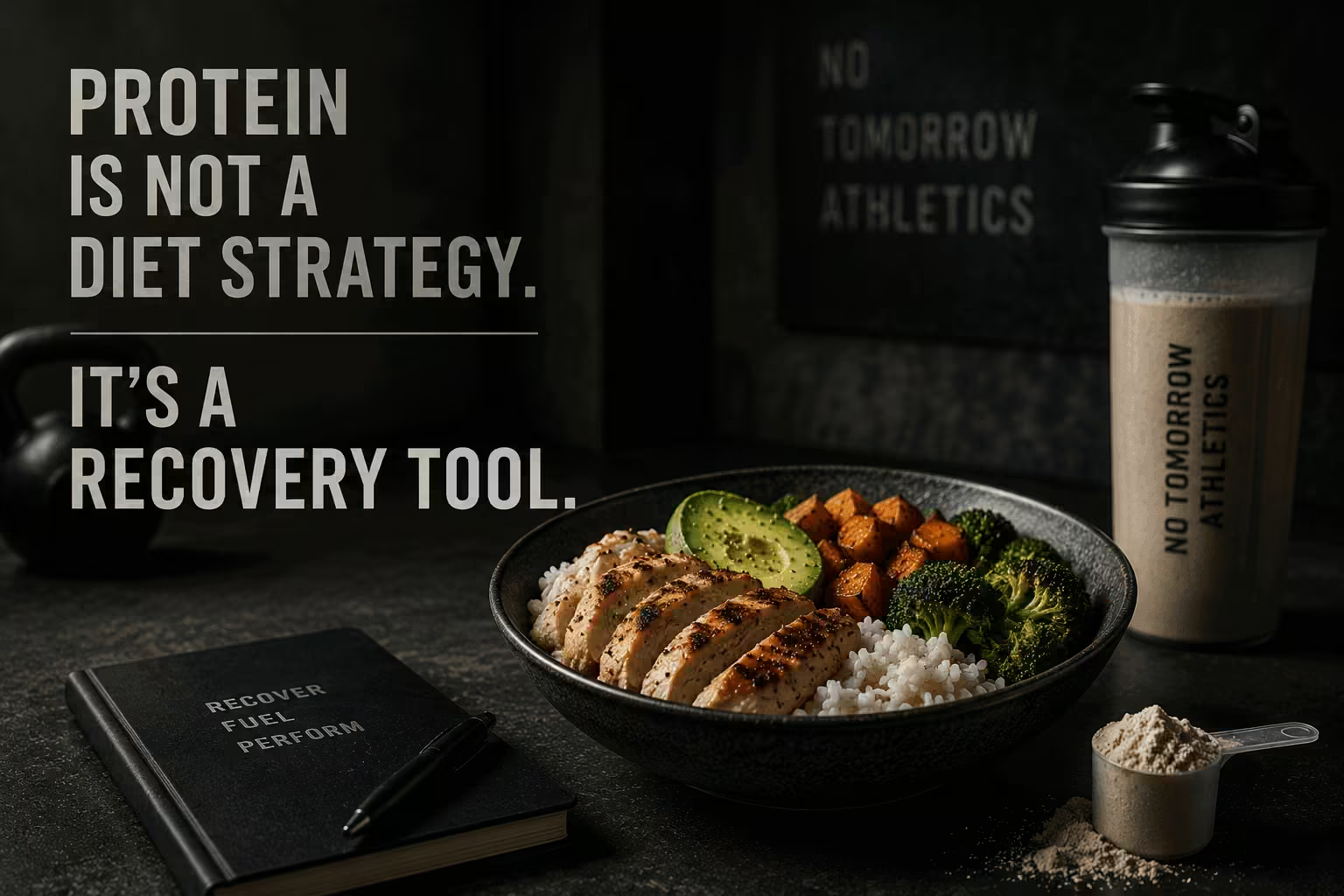
Protein is not a dieter's macronutrient. It is the raw material your body uses to repair muscle damage after training.
Most athletes who train seriously — multiple sessions a week, high-output conditioning, heavy strength work — are under-eating protein for muscle recovery. Not because they're counting poorly. Because they've been told protein is about body composition instead of what it actually is: a structural recovery input.
What the Evidence Says About Intake Targets
The current scientific consensus on protein for muscle recovery sits at 1.6 to 2.2 grams per kilogram of bodyweight per day for training athletes1. That range is especially important for athletes over 35, where age-related anabolic resistance means the signal to rebuild muscle requires a stronger nutritional stimulus, and even more important for women experiencing peri-menopause or menopause. That's not a range built around aesthetics. It's built around muscle protein synthesis — the process by which your body repairs damaged muscle tissue and builds it back stronger.
The lower end of that range applies to athletes training at moderate volume with adequate caloric intake. The upper end applies when training volume is high, when you're in a caloric deficit, or when you're in a competitive prep phase2. If you're doing Hyrox training blocks, heavy lifting five days a week, or stacking conditioning on top of strength work, you are almost certainly closer to the upper end.
At No Tomorrow Athletics, the athletes who stall — who stop recovering between sessions, who feel beaten up after week two of a block — are almost always the ones not hitting their protein targets.
Creatine stacks cleanly with protein through entirely separate mechanisms — it supports the energy system that powers the sessions protein helps you recover from.
The Anabolic Window Is Real. It's Just Bigger Than You Think.
For years, athletes were told they had 30 minutes after training to consume protein or the session was wasted. That's not what the research supports. Muscle protein synthesis remains elevated for several hours following resistance training — not 30 minutes3. The window exists. It's just not a narrow emergency. Pre-training protein is the other half of this equation — and it's more important than most athletes realize before they ever touch a post-workout shake.
What Timing Actually Means in Practice
Getting protein within two to three hours post-training is meaningful. It keeps synthesis elevated during the period when your muscle tissue is most primed to absorb and use amino acids. But if you train at 6am and eat breakfast at 7am, you are not leaving gains on the floor.
What matters more than the exact post-training minute is whether you are distributing protein across your day in doses that keep muscle protein synthesis elevated throughout. One protein shake does not fix six hours of inadequate intake.
Muscle repair is not a post-workout event. It's a 24-hour process. Feed it accordingly.
It's also largely a nocturnal process — muscle protein synthesis rates are highest during slow-wave sleep, which means what you eat before bed matters.
Dose Per Meal: The 40-Gram Signal
The body absorbs protein continuously. But research on muscle protein synthesis shows that 30 to 40 grams of high-quality protein per meal represents a practical ceiling for the anabolic stimulus in most athletes4. Beyond that dose, you're not getting meaningfully more synthesis — you're just processing more protein.
This is why spreading intake across three to four meals is more effective than eating 60 grams in one sitting and calling it done. Each meal is a separate signal. More signals across the day means more sustained repair.
Protein Quality Still Matters
Not all protein sources trigger the same anabolic response. Leucine — an essential amino acid — is the primary driver of muscle protein synthesis, and sources like animal proteins, dairy, and certain plant combinations (soy, pea-rice blends) deliver leucine effectively5. If you're primarily plant-based, you're not at a disadvantage, but you need to be intentional about combining sources and hitting total daily volume.
Protein quality and amino acid profile also directly influence the inflammatory response to training — not just synthesis rates.
Who Gets This Wrong (And How)
The athletes who underperform on recovery almost always fall into one of three patterns:
- They're eating enough protein by weight-loss standards — meaning around 0.8g/kg — which is the RDA for sedentary adults. That number was never designed for people training twice a day.
- They front-load protein at dinner and have almost nothing at breakfast and lunch. Muscle protein synthesis doesn't care about your evening meal if it's been starved all day.
- They treat protein as optional — something to add if they have room after carbs and fat. For athletes, that framing is backwards. Protein is the non-negotiable. Build around it.
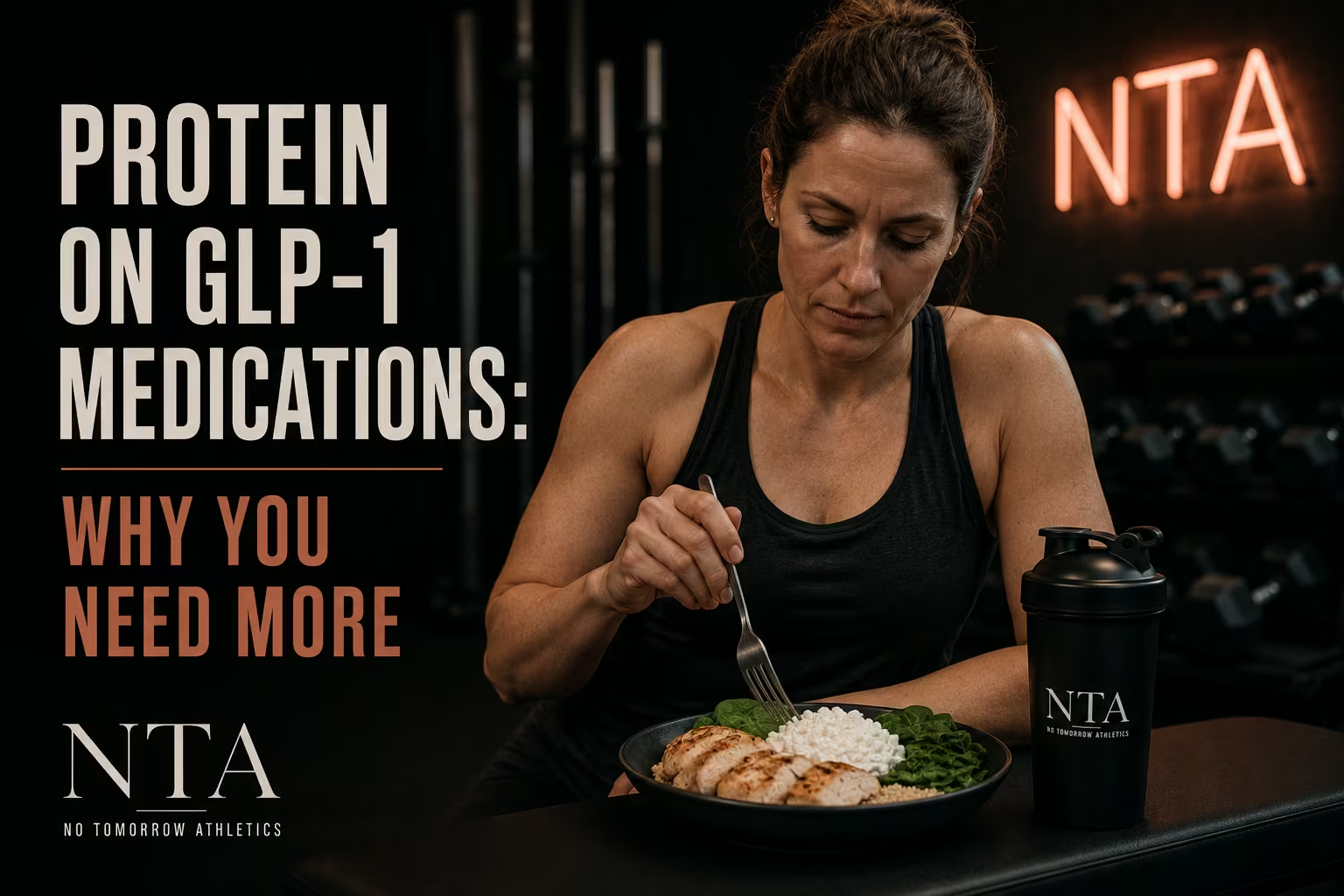
For athletes on GLP-1 medications, these requirements shift significantly — appetite suppression reduces total intake at the exact moment the caloric deficit increases anabolic resistance.
How No Tomorrow Athletics Coaches Think About This
We don't give athletes meal plans. We give them targets and principles.
Know your bodyweight in kilograms. Multiply by 1.6 to 2.2. That's your daily protein range. If you're in a hard block, go high. If your performance or recovery is slipping, go higher before you change anything else.
Distribute that intake across your day in meals that hit at least 30 grams of quality protein each. Don't skip breakfast. Don't skip post-training. Don't let six hours pass without a protein source.
This isn't a diet strategy. There is no aesthetic goal attached to any of this. This is about being able to train hard, recover fully, and do it again tomorrow. That's what the No Tomorrow Method is built on — and protein is part of the foundation.
Sources
- Morton RW, et al. A Systematic Review, Meta-Analysis and Meta-Regression of the Effect of Protein Supplementation on Resistance Training-Induced Gains in Muscle Mass and Strength in Healthy Adults. British Journal of Sports Medicine, 2018.
- Stokes T, Hector AJ, Morton RW, McGlory C, Phillips SM. Recent Perspectives Regarding the Role of Dietary Protein for the Promotion of Muscle Hypertrophy with Resistance Exercise Training. Nutrients, 2018.
- Schoenfeld BJ, Aragon AA. Is There a Postworkout Anabolic Window of Opportunity for Nutrient Consumption? Clearing up Controversies. Journal of Orthopaedic and Sports Physical Therapy, 2018.
- Moore DR, et al. Ingested Protein Dose Response of Muscle and Albumin Protein Synthesis After Resistance Exercise in Young Men. American Journal of Clinical Nutrition, 2009.
- van Vliet S, Burd NA, van Loon LJC. The Skeletal Muscle Anabolic Response to Plant- versus Animal-Based Protein Consumption. Journal of Nutrition, 2015.
Frequently Asked Questions
About the author
.avif)