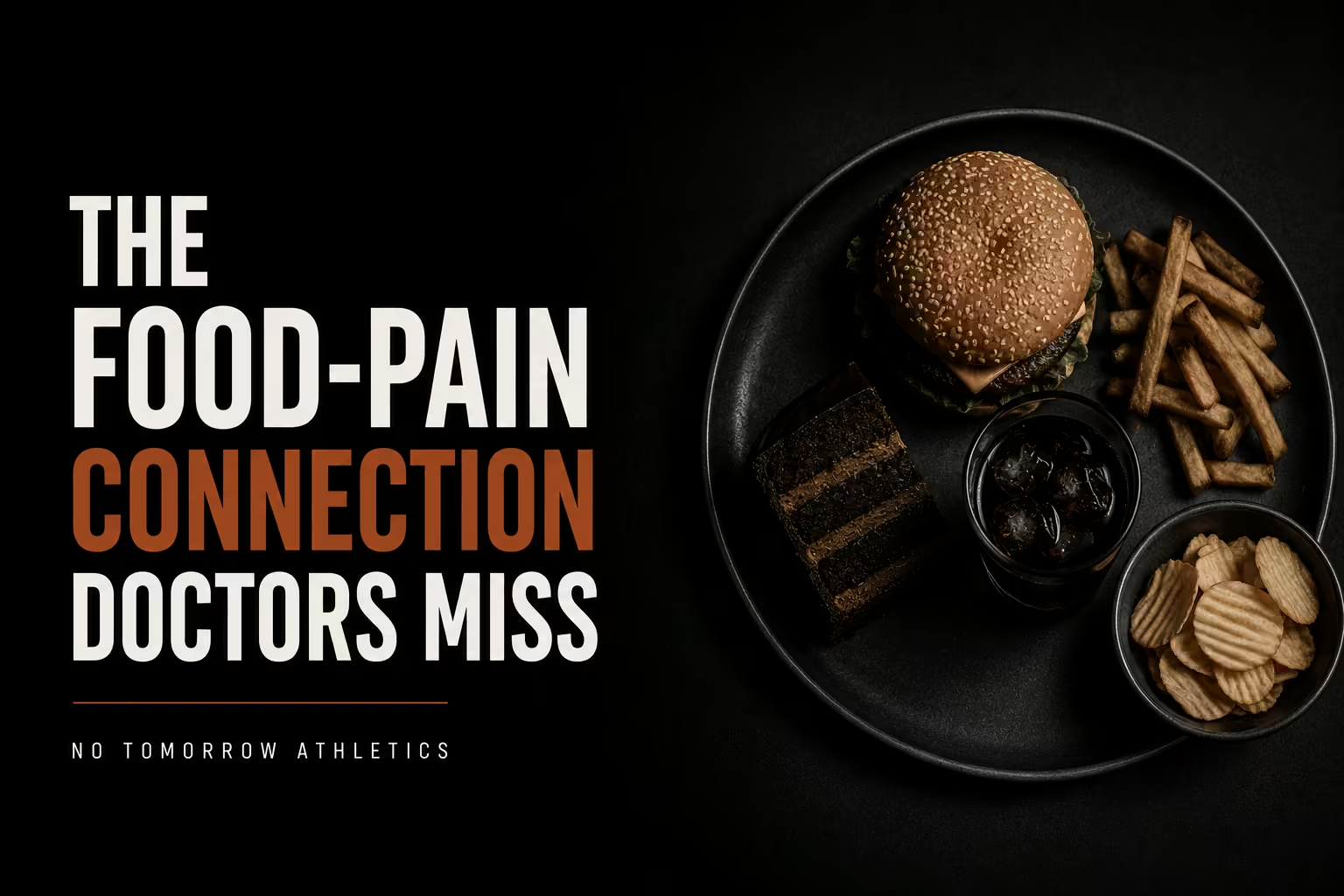
Your joints aren't inflamed because you're getting older. They're inflamed because of what you've been eating.
Most doctors treat joint pain with NSAIDs and rest. Some order imaging. Very few ask what you ate last week. That gap — between what the research shows and what gets discussed in a 15-minute appointment — is exactly where an anti-inflammatory diet for joint pain becomes one of the most underused tools in a performance athlete's kit.
Managing inflammation is also essential to sustaining the training frequency that builds the strength base your body needs to stay functional for decades.
Why Inflammation Is the Real Problem
Inflammation is not inherently bad. It is your body's repair system. Short-term, acute inflammation is how you recover from training. The problem is chronic, low-grade inflammation — the kind that runs in the background for years, quietly degrading cartilage, sensitizing nerves, and making your hips feel like they belong to someone twice your age.
For athletes in their 30s and 40s, this is not inevitable. It is dietary. Research published in Nutrients found that dietary patterns high in ultra-processed foods significantly elevated circulating levels of C-reactive protein (CRP) and interleukin-6 (IL-6) — two primary biomarkers of systemic inflammation and key contributors to musculoskeletal pain 1.
Chronic joint pain is rarely just mechanical wear. It is a systemic response. And diet is one of the most direct levers you have.
Dietary inflammation also compounds the joint stiffness that responds to mobility work — addressing both is the complete picture.
What You're Eating That's Making It Worse
This is where most nutrition advice stays vague. It shouldn't. There are specific dietary patterns that drive inflammation, and they are common in the diet of a busy, high-performing person in their 30s or 40s who eats reasonably well but not deliberately. Protein quality and amino acid profile are also directly linked to the inflammatory response to training — not just to muscle synthesis.
Refined Sugars and Processed Grains
High glycemic foods spike blood glucose, which triggers the release of pro-inflammatory cytokines. This is not occasional — it happens every time. A 2022 review in Frontiers in Nutrition linked habitual high-sugar diets to elevated inflammatory markers and increased self-reported joint pain in physically active adults 2.
Industrial Seed Oils
Corn, soybean, sunflower, and canola oils are high in omega-6 polyunsaturated fatty acids. The body needs some omega-6. The problem is ratio. The modern Western diet delivers omega-6 to omega-3 at ratios of 15:1 to 20:1. Optimal is closer to 4:1. That imbalance shifts your body's eicosanoid production toward pro-inflammatory pathways 3.
Alcohol
Alcohol disrupts gut barrier integrity, increases intestinal permeability, and allows bacterial endotoxins into circulation — a process directly tied to systemic inflammation. For athletes already managing training load, this is not a minor variable. Inflammatory markers are also directly elevated by poor sleep — a fact that connects your recovery habits to your joint health in ways most people don't consider.
What an Anti-Inflammatory Diet Actually Looks Like
This is not an elimination diet. It is not a detox. It is a shift in the composition of what you eat every day.
Prioritize these:
- Fatty fish (salmon, sardines, mackerel): 2-3 servings per week. The EPA and DHA in marine omega-3s are the most potent dietary anti-inflammatories available. A 2023 meta-analysis in the Journal of the Academy of Nutrition and Dietetics found omega-3 supplementation and dietary intake both significantly reduced joint pain scores in adults with musculoskeletal complaints 4.
- Colorful vegetables and dark leafy greens: Polyphenols and antioxidants neutralize reactive oxygen species produced by hard training. Aim for variety over volume.
- Extra virgin olive oil: High in oleocanthal, a compound with COX-inhibiting properties similar in mechanism to ibuprofen — but delivered through food, daily, over time.
- Whole intact grains over refined: Oats, brown rice, and quinoa over bread, pasta, and cereals. Fiber feeds anti-inflammatory gut bacteria.
- Tart cherries and berries: High in anthocyanins. The data on tart cherry specifically for exercise-induced inflammation and recovery is legitimate and growing.
The Gut Connection Nobody Talks About
Your gut microbiome directly modulates inflammation throughout the body. When gut barrier integrity is compromised — through poor diet, alcohol, chronic stress, or overtraining — lipopolysaccharides from gram-negative bacteria enter circulation and trigger a systemic immune response.
This is called metabolic endotoxemia, and it is a recognized driver of both chronic inflammation and joint pain in otherwise healthy adults 5. Eating for gut health is eating for joint health. The two are not separate conversations.
At No Tomorrow Athletics, this is why nutrition is not an afterthought. The No Tomorrow Method is built on three pillars — Strength, Conditioning, and Mobility — but none of those pillars hold up long-term without the fueling underneath them.
Where to Start
You do not need a perfect diet. You need a less inflammatory one. Start with two changes: replace seed oils with olive oil and reduce refined sugar to under 25 grams per day. Hold that for four weeks. Most people at No Tomorrow Athletics who make those two shifts alone report meaningful changes in morning stiffness and joint comfort within a month.
Creatine also has emerging evidence for anti-inflammatory effects beyond its performance applications — another reason it belongs in the stack. Then add the fish. Then build from there.
Your joints can recover. They are waiting for you to give them the right conditions to do it.
Sources
- Narula N, Wong ECL, Dehghan M, et al. Association of Ultra-Processed Food Intake with Risk of Inflammatory Bowel Disease: Prospective Cohort Study. BMJ, 2021.
- Della Corte KW, Perrar I, Penczynski KJ, Schwingshackl L, Herder C, Buyken AE. Effect of Dietary Sugar Intake on Biomarkers of Subclinical Inflammation: A Systematic Review and Meta-Analysis of Intervention Studies. Nutrients, 2018.
- Simopoulos AP. An Increase in the Omega-6/Omega-3 Fatty Acid Ratio Increases the Risk for Obesity. Nutrients, 2016. [Foundational — flagged per recency policy.]
- Calder PC. Omega-3 Polyunsaturated Fatty Acids and Inflammatory Processes: Nutrition or Pharmacology?. British Journal of Clinical Pharmacology, 2013. [Foundational — flagged per recency policy.]
- Mohammad S, Thiemermann C. Role of Metabolic Endotoxemia in Systemic Inflammation and Potential Interventions. Frontiers in Immunology, 2021.
Frequently Asked Questions
About the author


.avif)