The pre-workout meal is one of the most searched topics in fitness. It is also one of the most poorly answered.
Most of what ranks online is written for people who want to feel good eating before a class. This post is written for athletes who need to perform — specifically, athletes asking what to eat before a workout and getting answers that don't hold up inside a session.
At No Tomorrow Athletics, pre-training nutrition is not an afterthought. It is part of the training plan. Get it wrong and you are asking your body to produce output it does not have the fuel to sustain.
The Three Most Common Pre-Training Nutrition Mistakes
1. Eating Too Much Fat Too Close to Training
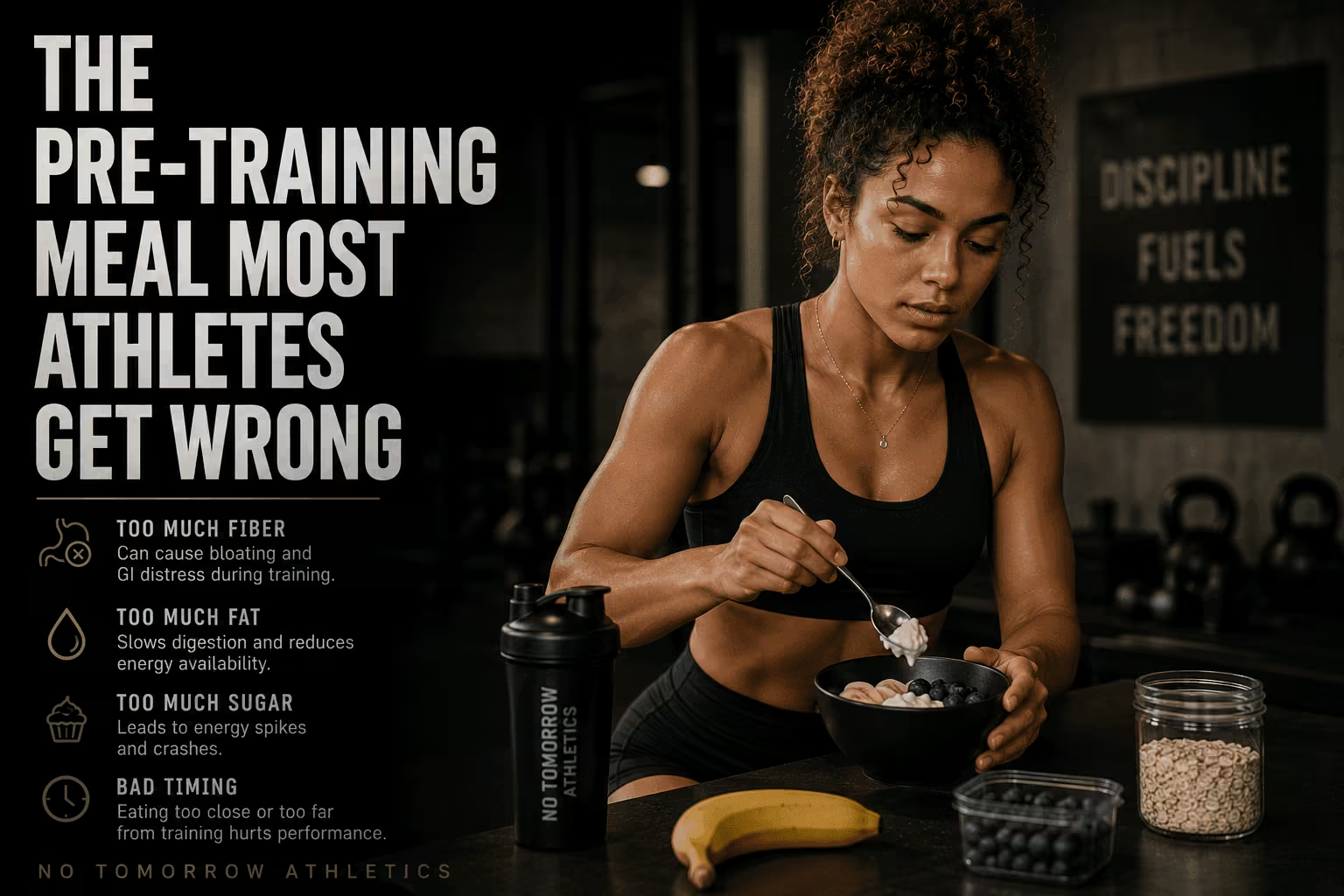
Fat is not the enemy. But fat has the slowest gastric emptying rate of the three macronutrients1. When you eat a high-fat meal 60 to 90 minutes before training, that food is still sitting in your stomach when you start moving. The result: sluggishness, GI discomfort, and blunted carbohydrate absorption at the moment you need it most.
This does not mean avoiding fat entirely. It means understanding that fat belongs in meals two to three hours before a session — not in the meal immediately preceding it. A full-fat Greek yogurt parfait with nuts thirty minutes before a conditioning circuit is not performance nutrition. It is a liability.
2. Relying on Fructose-Only Carbohydrate Sources
Not all carbohydrates are equal when it comes to fueling muscle. Glucose is the preferred substrate for muscle glycogen replenishment. Fructose, by contrast, is metabolized primarily in the liver — not the muscle2. Fueling strategy also differs meaningfully between Zone 2 sessions and high-intensity work — what works before a conditioning circuit is not what works before a long aerobic session.
This is why an apple or a handful of dried mango, while real food, are suboptimal pre-training carbohydrate sources when consumed alone. You are filling liver glycogen. You are not loading the muscle tissue doing the work.
The practical fix is simple: prioritize glucose-dominant carbohydrate sources before training. White rice, plain oats, sourdough or white toast, a ripe banana (higher glucose ratio as it ripens), or a sports drink using a glucose-fructose blend all outperform pure fructose sources in pre-training contexts3.
3. Skipping Pre-Training Protein
This one is underrated and under-discussed. Most pre-training nutrition conversation centers on carbohydrates. Protein before training is treated as optional at best. The research says otherwise. Consuming 20 to 40 grams of leucine-rich protein one to two hours before training measurably elevates muscle protein synthesis rates both during and after the session4. Pre-training protein does not just protect muscle — it actively signals anabolic processes before the first rep.
The athlete who skips protein before a strength session and waits until the post-training window is leaving adaptation on the table. What you eat after your session is the other half of the equation — and most athletes are getting that wrong too.
What to Eat Before a Workout — By Time Window
You are not fueling the way you look. You are fueling the work.
2–3 Hours Out: The Full Pre-Training Meal
This is your primary fueling window. You have enough time to digest a complete, balanced meal without interference during training.
Target:
- 60–100g of glucose-dominant carbohydrates (rice, oats, potato, pasta)
- 30–40g of lean protein (chicken breast, eggs, white fish, whey protein)
- Moderate fat is acceptable here — 10–20g — because gastric emptying time is not yet a constraint
- Keep fiber moderate; high fiber immediately pre-training increases GI distress risk during conditioning work5
A practical example: four ounces of chicken, one cup of white rice, and a small portion of roasted vegetables. Nothing complicated. Nothing from a label.
60–90 Minutes Out: The Lighter Fuel-Up
If you are training mid-morning or at lunch without time for a full meal, this window requires a different approach. Prioritize digestion speed.
Target:
- 30–60g of fast-digesting carbohydrates
- 20–30g of protein from a rapidly absorbed source (whey protein isolate, eggs, Greek yogurt)
- Fat under 10g
- Avoid anything high in fiber or volume
A practical example: a banana with a whey protein shake, or two eggs on white toast. Simple. Fast-digesting. Out of the way before you train.
30 Minutes or Less: Small Adjustments Only
If you are within thirty minutes of training and have not eaten, a full pre-training meal is no longer possible. Do not try to force one.
A small, fast carbohydrate source — a few dates, a ripe banana, or a glucose-based sports drink — can provide a modest glycogen top-up. Skip protein and fat at this window; neither will clear your stomach before you start.
This is damage control, not optimization. Build your schedule around the earlier windows.
What to Avoid and Why
High-Fat Foods Within 90 Minutes of Training
Nut butters, avocado, full-fat dairy, and oils all slow gastric emptying and delay carbohydrate access. They are excellent food. The timing is wrong.
Pure Fructose Sources as Your Only Carbohydrate
Fruit juice, agave, honey used alone, and most fruits contain fructose-dominant carbohydrate profiles. Pair them with a glucose source or replace them outright before high-output sessions.
High-Fiber Meals Close to Training
Fiber slows digestion, which is valuable in most contexts. Before training, it increases the risk of GI discomfort and can blunt carbohydrate absorption speed [5]. Keep fiber-heavy foods — legumes, raw cruciferous vegetables, high-bran grains — for meals well outside the training window.
Skipping the Pre-Training Meal Entirely
Training fasted has a narrow, specific application. For low-intensity aerobic work, some athletes tolerate it without performance loss. For strength training, high-intensity conditioning, Hyrox-style mixed modal work, or anything requiring sustained power output, fasted training consistently underperforms fueled training in the research6.
If you are doing real work, you need real fuel.
Putting It Together at No Tomorrow Athletics
The No Tomorrow Method is built around three pillars: Strength, Conditioning, and Mobility. Every one of those pillars requires fuel to execute and to adapt from. Pre-training nutrition is not a wellness habit — it is a performance input.
Two to three hours before a session: eat a complete meal with glucose-dominant carbohydrates, lean protein, and moderate fat. Sixty to ninety minutes out: a smaller, low-fat, fast-digesting version of the same. Within thirty minutes: a small carbohydrate top-up at most. The one addition that consistently improves training output regardless of meal timing is creatine — and the evidence for it is cleaner than anything else available.
Protein before the session. Glucose to the muscle. Fat out of the way. That is what the research supports. That is what your output will reflect.
Sources
- Clegg M, Shafat A. Energy and Macronutrient Composition of Breakfast Affect Gastric Emptying of Lunch and Subsequent Food Intake, Satiety and Satiation. Appetite, 2010.
- Jensen NS, Wodtke J, Vlahov E, Jensen J. Postexercise Glycogen Synthesis: Effects of Carbohydrate Source and Timing. Journal of the International Society of Sports Nutrition, 2023.
- Podlogar T, Wallis GA. New Horizons in Carbohydrate Research and Application for Endurance Athletes. Sports Medicine, 2022.
- Trommelen J, Betz MW, van Loon LJC. The Muscle Protein Synthetic Response to Meal Ingestion Following Resistance-Type Exercise. Sports Medicine, 2019.
- de Oliveira EP, Burini RC, Jeukendrup A. Gastrointestinal Complaints During Exercise: Prevalence, Etiology, and Nutritional Recommendations. Sports Medicine, 2014.
- Aird TP, Davies RW, Carson BP. Effects of Fasted vs Fed-State Exercise on Performance and Post-Exercise Metabolism: A Systematic Review and Meta-Analysis. Scandinavian Journal of Medicine and Science in Sports, 2018.
Frequently Asked Questions
About the author



.avif)