.avif)
Most supplements are expensive noise. Creatine is not.
The creatine benefits for athletes are not a marketing claim. They are among the most replicated findings in sports science — documented across hundreds of peer-reviewed trials spanning more than three decades. If you train hard and you are not taking creatine, you are leaving a measurable performance advantage on the table. That is not a sales pitch. That is the literature.
What Creatine Does — The Actual Mechanism
Your muscles run on ATP (adenosine triphosphate). Every explosive rep, every sprint interval, every max-effort movement burns through ATP in seconds. The fastest way your body regenerates that ATP is through the phosphocreatine system.
Phosphocreatine — stored in skeletal muscle — donates a phosphate molecule to ADP, recycling it back into usable ATP. The more phosphocreatine you have stored, the more ATP you can regenerate, and the longer you can sustain high-intensity output before fatigue forces you to slow down.1
Creatine supplementation increases total muscle phosphocreatine stores by approximately 20–40%. [1] That is the entire mechanism. There is no mystery. There is no proprietary blend. You are topping off the most immediate energy system your body has.
What the Evidence Actually Shows
This is where creatine separates from everything else sold in a tub.
Strength and Power Output
A meta-analysis published in the Journal of Strength and Conditioning Research found that creatine supplementation combined with resistance training produced significantly greater gains in 1RM strength compared to training alone.2 The effect is not modest. Across studies, strength gains were consistently 5–15% greater in creatine groups.
High-Intensity Repeat Performance
For athletes doing interval work, circuit training, or competition formats like Hyrox — where you are repeating high-output efforts with incomplete rest — creatine matters. Research shows improved performance in repeated sprint protocols and reduced performance decrements across multiple sets of heavy resistance exercise.3 You recover faster between efforts. You do more work in the same window.
Lean Mass and Body Composition
Creatine does not build muscle by itself. Training builds muscle. Creatine lets you train harder, more often, and with greater volume — and that is what drives hypertrophy. The mass gains associated with creatine are real, but they are downstream of the performance effect, not separate from it.
Cognitive and Recovery Effects
Newer research is expanding the picture. A 2022 meta-analysis found that creatine supplementation improved measures of short-term memory and reasoning, particularly under conditions of sleep deprivation and mental fatigue.4 This is not the primary reason to take it — but it is a signal that the benefits extend beyond the barbell.
The supplement industry profits from confusion. Creatine is the exception — the evidence is so clear it embarrasses everything else on the shelf.
Dosing — What Actually Works
Forget the complicated protocols. Here is the evidence distilled.
The Standard Dose
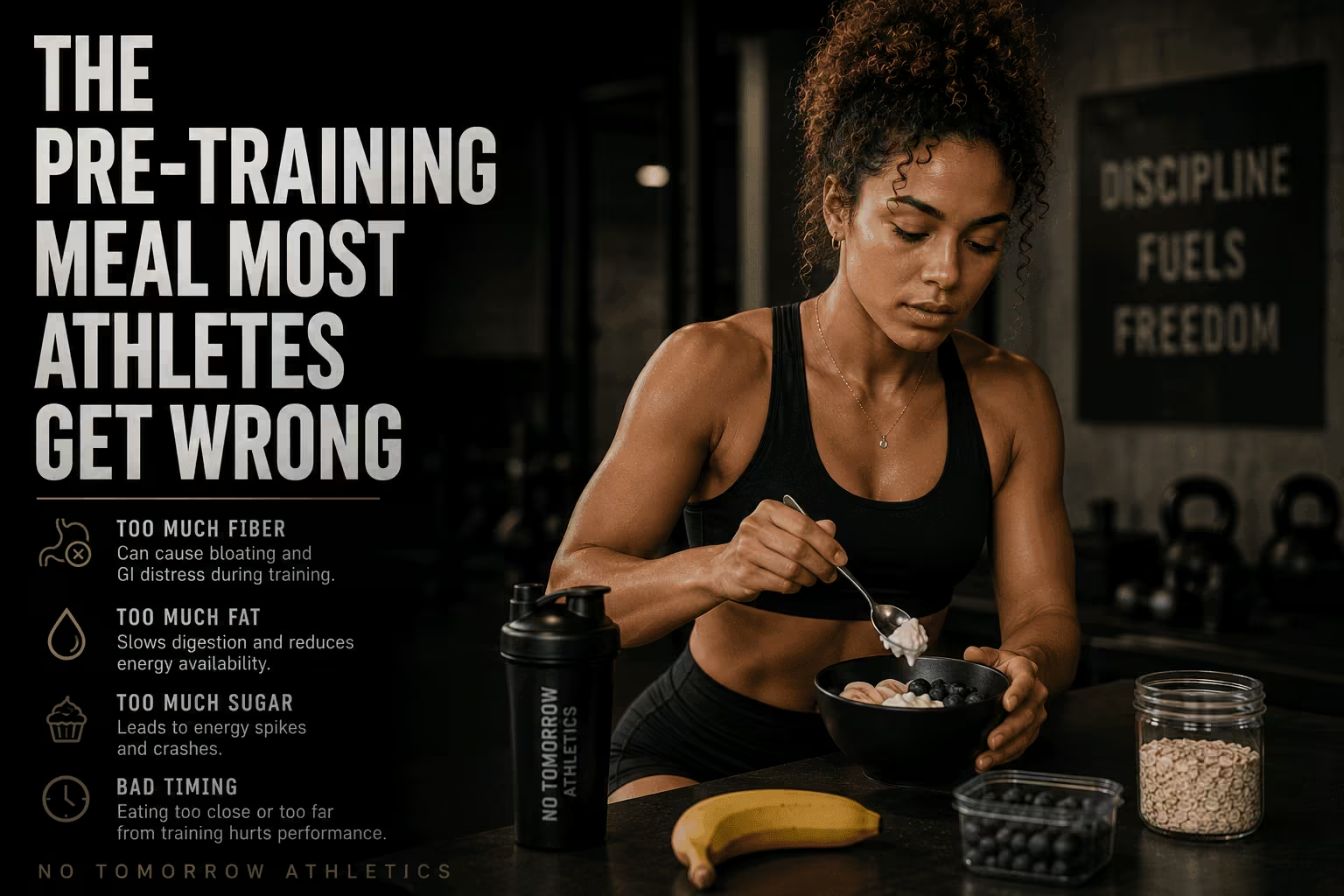
3–5 grams per day, every day. This is the International Society of Sports Nutrition's (ISSN) recommended maintenance dose, and it is sufficient to fully saturate muscle creatine stores within 3–4 weeks.5 Take it at any time. Consistency matters more than timing. Creatine timing relative to your training session is a common source of confusion — the pre-workout meal post addresses this directly.
Loading: Optional, Not Required
The loading protocol — 20 grams per day split into four doses for 5–7 days — saturates stores faster. You reach peak levels in about a week instead of a month. The endpoint is identical.5
Loading is useful if you have a competition approaching and you want to be saturated quickly. It is not useful for most people in most circumstances. Some individuals experience mild gastrointestinal discomfort at high doses. If that applies to you, skip loading and be patient.
Creatine Monohydrate — Full Stop
Buy creatine monohydrate. It is the form used in the vast majority of research. It is the cheapest form available. Products marketed as "buffered," "ethyl ester," or "hydrochloride" versions have not demonstrated superior outcomes in direct comparisons. The premium price is not justified by the data. This is the industry manufacturing confusion — and creatine monohydrate cuts right through it.
Creatine and protein work through entirely separate mechanisms and stack cleanly — one supports the phosphocreatine system, the other drives muscle protein synthesis.
Who Benefits Most
Creatine benefits are not uniform across all athletes, but the breadth of the effect is wider than most people realize.
Strength and Power Athletes
The most established benefits are in maximal strength and anaerobic power — exactly the demands of heavy lifting, sprinting, and short-duration high-intensity work. If your training is built around this output profile, creatine is non-negotiable.
Functional Fitness and Hyrox Athletes
At No Tomorrow Athletics, our athletes are not single-modal. They are lifting, running, rowing, and sled pushing — often in the same session. The phosphocreatine system is under repeated demand throughout that type of work. Research supports creatine use in high-intensity intermittent sport formats directly comparable to functional fitness competition.3 The case here is strong.
Older Athletes
Muscle creatine stores decline with age. Older adults show reduced phosphocreatine resynthesis rates and are at higher risk for sarcopenia — age-related muscle loss. A growing body of research supports creatine supplementation in older populations specifically for preserving muscle mass and functional strength.6 If you are over 40 and training seriously, this belongs in your stack.
Vegetarians and Vegans
Dietary creatine comes primarily from animal protein — beef, fish, and poultry. Athletes who do not eat meat have lower baseline muscle creatine concentrations and tend to show larger absolute responses to supplementation.5 If you are plant-based, creatine is not optional. It is corrective.
Women
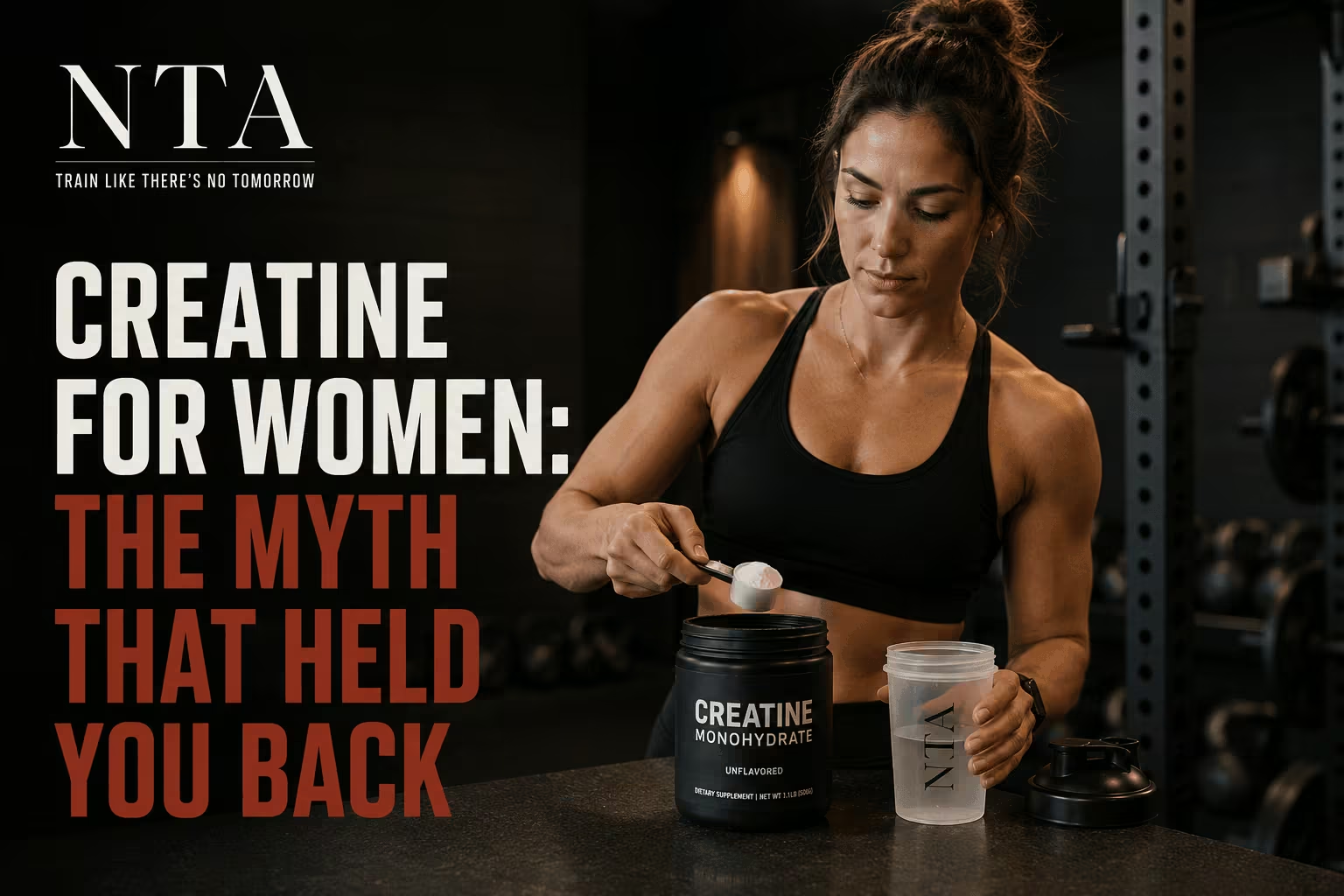
For years, women were told that Creatine would bloat them, and for years, women who chose to believe these rumors missed out on one the best supplements they can take for overall health and wellbeing.
Common Concerns — Addressed Directly
Kidney Health
This concern is not supported by evidence in healthy individuals. Long-term creatine supplementation studies in trained athletes show no adverse effects on kidney function.5 Creatine raises serum creatinine — a kidney marker — but this reflects increased creatine metabolism, not kidney damage. If you have pre-existing kidney disease, consult your physician. If you are healthy, the data is clear.
The Water Retention Question
Creatine increases intracellular water — water stored inside muscle cells, not subcutaneous water. This drives cell volumization, which may directly support muscle protein synthesis pathways.1 It is not cosmetic bloating. It is a functional adaptation.
The NTA Standard on Supplementation
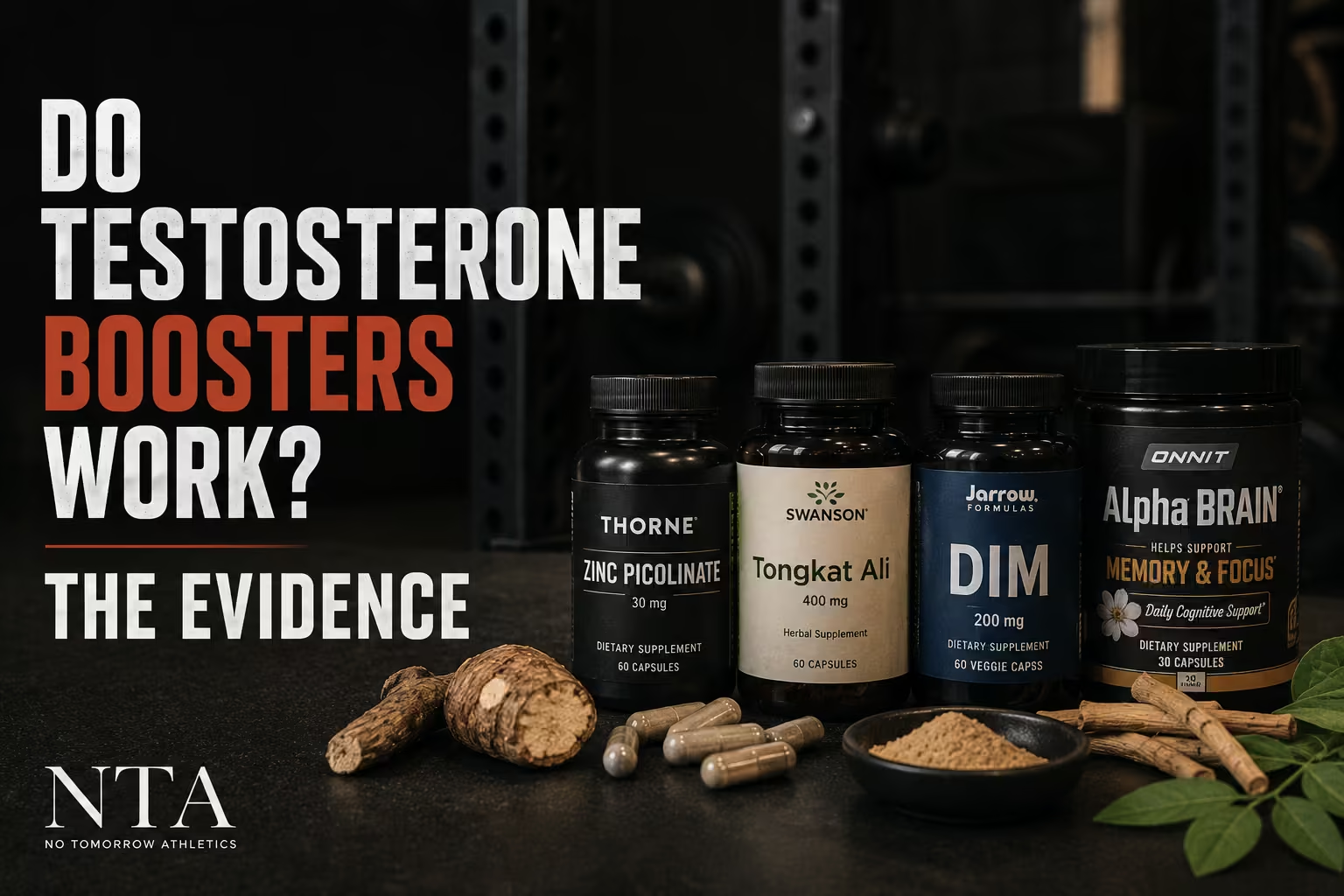
At No Tomorrow Athletics, we do not recommend supplements based on marketing. We recommend them when the evidence is sufficient and the risk is minimal. Very few supplements meet both criteria. Creatine's strength case is backed by decades of research, whereas testosterone boosters can't say the same.
Creatine meets both criteria better than anything else available. It is safe, inexpensive, well-tolerated, and backed by more high-quality research than any other ergogenic aid in the category.
The supplement industry profits from complexity — from proprietary blends, from novel molecules, from the suggestion that what you have is not enough. Creatine is the antidote to that. It is boring. It is white powder in a bag. And it works.
Take 3–5 grams per day. Do not overthink it. Train hard. Come back tomorrow.
Sources
- Wyss M, Kaddurah-Daouk R. Creatine and Creatinine Metabolism. Physiological Reviews, 2000.
- Lanhers C, et al. Creatine Supplementation and Lower Limb Strength Performance: A Systematic Review and Meta-Analyses. Sports Medicine, 2015.
- Mielgo-Ayuso J, et al. Effects of Creatine Supplementation on Athletic Performance in Soccer Players: A Systematic Review and Meta-Analysis. Nutrients, 2019.
- Candow DG, et al. Creatine Supplementation and Physical Performance: A Systematic Review. Nutrients, 2022.
- Kreider RB, et al. International Society of Sports Nutrition Position Stand: Safety and Efficacy of Creatine Supplementation in Exercise, Sport, and Medicine. Journal of the International Society of Sports Nutrition, 2017.
- Candow DG, et al. Creatine Supplementation for Older Adults: Focus on Sarcopenia, Osteoporosis, Frailty and Cachexia. Bone, 2022.
Frequently Asked Questions
About the author